

Introduction
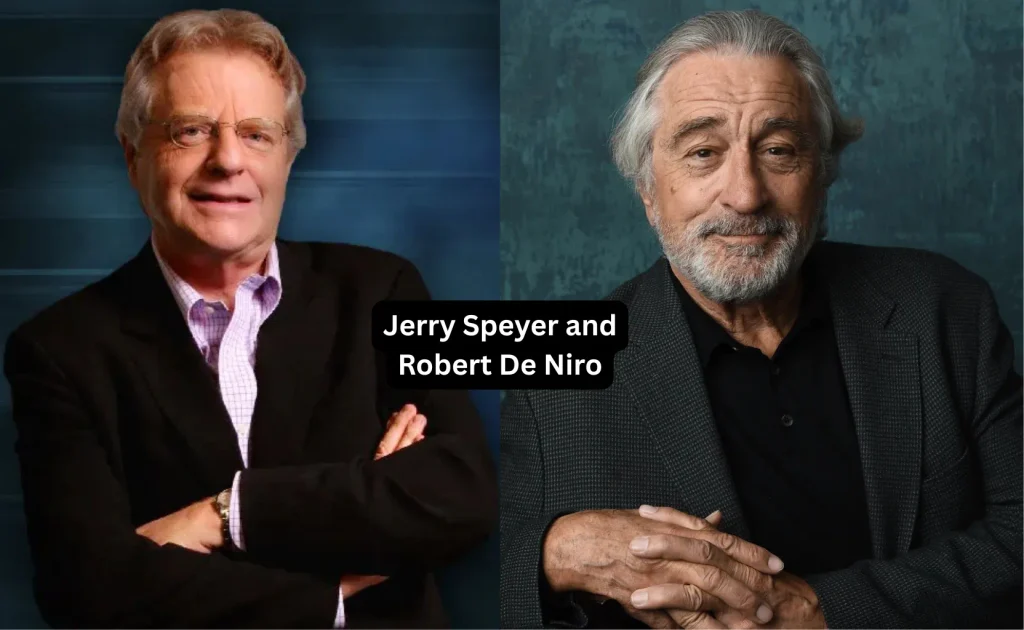
The names Jerry Speyer and Robert De Niro bring together two very different sides of New York City. Jerry Speyer is a major figure in real estate, while Robert De Niro is one of the most recognized actors and cultural figures associated with New York. Their professional careers developed in different industries, but both have had a lasting influence on the city.
Jerry Speyer built his reputation through commercial real estate and his leadership at Tishman Speyer. His career has been connected with major properties and large-scale urban development. Robert De Niro, meanwhile, became internationally famous through film and later expanded his work into production, restaurants, hospitality, and cultural projects.
The interest in Jerry Speyer and Robert De Niro largely comes from their connection to New York’s broader business and cultural environment. Both men have been associated with influential parts of Manhattan, particularly the downtown area, although their roles have been very different.
It is important to clarify that there is no well-established public evidence showing that Speyer and De Niro are business partners or that they share a major company. Their connection is better understood through the wider story of New York City, where real estate, entertainment, hospitality, and culture frequently overlap.
Looking at their careers separately provides a clearer picture of why both names can appear in discussions about New York’s development. One helped shape the physical and commercial landscape of the city, while the other contributed heavily to its cultural identity.
This article explores their backgrounds, careers, New York connections, the Tribeca story, and the reasons people sometimes search for the two names together.
Who Is Jerry Speyer?
Jerry I. Speyer is an American real estate developer and businessman best known as a founding figure of Tishman Speyer. He was born in Milwaukee, Wisconsin, in 1940 and later built a long career in New York real estate.
Speyer entered a field that plays a major role in shaping major cities. Real estate development involves much more than constructing buildings. It includes investment, financing, property management, redevelopment, partnerships, and long-term decisions about how valuable urban spaces are used.
In 1978, Speyer founded Tishman Speyer with his father-in-law Robert Tishman. The company eventually became one of the world’s major real estate organizations. Its portfolio has included prominent commercial properties in New York and other international cities.
One of the most recognizable parts of Speyer’s professional legacy is his association with major Manhattan properties. Tishman Speyer was involved in the acquisition and redevelopment of Rockefeller Center, one of New York City’s most famous commercial and cultural landmarks.
Speyer’s influence also extends beyond individual buildings. Over several decades, his career has placed him among the prominent figures in New York’s commercial real estate industry. His work demonstrates how large property companies can influence the economic character of a city.
Today, Jerry Speyer remains closely associated with Tishman Speyer, while his son Rob Speyer has taken on a major leadership role within the company. Forbes identifies Jerry Speyer as chairman, with Rob Speyer serving as CEO.
Read Also: Richard Peery and Akio Toyoda: Two Powerful Business Leaders With Very Different Paths to Success
Who Is Robert De Niro?
Robert De Niro is an American actor, producer, and entrepreneur whose career has made him one of the most recognizable figures in international cinema. His work spans several decades and includes many highly respected films.
De Niro became particularly famous for his collaborations with director Martin Scorsese. Movies such as Taxi Driver, Raging Bull, and Goodfellas helped establish his reputation as one of the defining actors of his generation.
His career is not limited to acting. De Niro has also worked as a producer and entrepreneur, becoming involved in restaurants, hospitality, and cultural projects. These activities strengthened his connection to New York beyond the film industry.
One of his strongest New York associations is Tribeca. De Niro became closely linked with the neighborhood through his production company, restaurants, and involvement in the Tribeca Film Festival. His cultural activities helped make Tribeca a globally recognizable part of Manhattan.
The actor’s relationship with Lower Manhattan became especially significant after the September 11 attacks. The Tribeca Film Festival was launched in 2002 by De Niro, Jane Rosenthal, and Craig Hatkoff, with the goal of helping bring renewed attention and activity to Lower Manhattan.
As a result, De Niro represents a different kind of urban influence from Speyer. Rather than shaping the city primarily through property development, he has contributed through film, hospitality, entrepreneurship, and cultural activity.
What Connects Jerry Speyer and Robert De Niro?
The connection between Jerry Speyer and Robert De Niro is best understood as a New York City connection rather than a confirmed business partnership. Their professional careers have largely remained separate.
Speyer’s influence comes from real estate development and investment. De Niro’s influence comes from entertainment and cultural entrepreneurship. Both industries, however, play important roles in the development and identity of major cities.
New York provides a natural meeting point for these different worlds. Developers create and manage the physical spaces where businesses and cultural institutions operate, while artists, filmmakers, restaurants, and entrepreneurs help give neighborhoods their character.
Historical coverage of New York’s power structure has even placed Speyer and De Niro within the same broad discussion of influential city figures. The Observer, for example, included both names in its 2008 list of powerful people connected with New York real estate and urban influence.
That type of coverage does not establish a direct partnership. Instead, it illustrates how different kinds of influential people can become part of the same story about New York.
Therefore, when researching Jerry Speyer and Robert De Niro, it is useful to separate the documented facts from assumptions. Their shared connection is mainly the city and its evolving economic and cultural landscape.
The Tribeca and Lower Manhattan Connection
Tribeca is an important part of understanding why these two names can appear together. The neighborhood has experienced major changes over the decades, moving from an industrial area into one of Manhattan’s best-known residential, cultural, and entertainment districts.
Robert De Niro became one of Tribeca’s most recognizable cultural supporters. His restaurants, production activities, and the Tribeca Film Festival helped strengthen the neighborhood’s association with film and entertainment.
The festival was particularly significant because it arrived during a difficult period for Lower Manhattan. Its launch helped create a major cultural event that brought filmmakers, audiences, and international attention to the area.
Jerry Speyer’s connection to Manhattan is different. His career has centered on large-scale real estate and commercial property. Tishman Speyer’s involvement in major New York properties reflects the economic and physical side of the city’s transformation.
These two forms of influence can exist in the same urban environment without requiring a direct partnership. A neighborhood needs buildings, investment, businesses, cultural institutions, residents, and visitors to develop a strong identity.
This is why discussions involving Jerry Speyer and Robert De Niro can be interesting even without a confirmed joint project. Their stories demonstrate how business and culture can influence the same city from different directions.
The broader lesson is that New York’s development cannot be explained through real estate alone or entertainment alone. The city’s identity has been shaped by many people working in different industries at different times.
Jerry Speyer’s Real Estate Legacy
Jerry Speyer’s professional legacy is strongly connected with Tishman Speyer and the development and management of major commercial properties. The company has grown into an international real estate organization with projects across several major markets.
Rockefeller Center is one of the clearest examples of the scale of Speyer’s real estate career. Tishman Speyer and partners acquired the landmark complex in 2000, adding one of the world’s best-known property collections to the company’s portfolio.
The Chrysler Building is another prominent property associated with Tishman Speyer’s history. Major properties such as these illustrate the size and complexity of the commercial real estate business.
Speyer’s career also demonstrates the importance of long-term investment. Major buildings require continuing management, financing, maintenance, redevelopment, and strategic planning. Their value can change as neighborhoods and business conditions evolve.
His influence has extended beyond New York as well. Forbes reports that Tishman Speyer has developed more than 152 million square feet across markets including New York, Chicago, Berlin, London, Frankfurt, and Paris.
This international reach helps explain why Jerry Speyer is considered an important figure in the global real estate industry. His story is not simply about individual buildings but about the growth of a major development company.
For readers interested in New York’s business history, Speyer’s career provides a useful example of how commercial property can shape the economic and physical character of a city.
Robert De Niro’s Cultural Influence on New York
Robert De Niro’s influence on New York is primarily cultural. His acting career helped bring international attention to the city through films that portrayed New York in memorable and often dramatic ways.
His connection to Tribeca made his influence even more visible outside the film industry. By investing time and energy in restaurants, production, hospitality, and cultural events, De Niro became part of the neighborhood’s public identity.
The Tribeca Film Festival became one of the most recognizable parts of that contribution. It created a platform for filmmakers and gave Lower Manhattan a major annual cultural event.
De Niro’s business activities also show how entertainers can expand their influence beyond their primary profession. His work in hospitality and restaurants connected his public image with New York’s food and tourism industries.
Unlike a real estate developer, De Niro does not primarily shape a neighborhood by constructing office towers or acquiring large commercial properties. His influence is instead connected with people, entertainment, restaurants, storytelling, and cultural experiences.
That distinction makes comparisons between him and Speyer especially interesting. Both have influenced New York, but they have done so through fundamentally different professional paths.
Their stories also show why major cities are shaped by a combination of economic investment and cultural activity. Buildings provide physical infrastructure, while culture helps create the identity that attracts people to those places.
Are Jerry Speyer and Robert De Niro Business Partners?
There is no well-established public evidence that Jerry Speyer and Robert De Niro are formal business partners. Their major professional activities have developed in separate areas, with Speyer focused on real estate and De Niro focused on entertainment, hospitality, and cultural projects.
This distinction matters because online discussions can sometimes make indirect connections appear stronger than they really are. Being associated with the same city, neighborhood, or influential social environment does not automatically mean two people have a business relationship.
Speyer’s documented corporate history centers on Tishman Speyer. Forbes describes him as the company’s chairman and identifies his son Rob Speyer as CEO.
De Niro’s documented professional history centers on acting, film production, hospitality, and cultural ventures. His connection to Tribeca is particularly strong, but that does not establish a joint venture with Speyer.
The two men can still be discussed together because both represent influential parts of New York’s modern story. Their careers show how different industries can contribute to the development and reputation of the same city.
For accurate online content, it is better to describe their relationship as an indirect New York connection rather than claim a partnership that has not been clearly documented.
This approach also makes the topic more informative. Instead of focusing on an unsupported relationship, readers can understand how real estate and culture have both contributed to New York’s evolution.
Why People Search for Jerry Speyer and Robert De Niro Together
Search interest in Jerry Speyer and Robert De Niro may come from their overlapping connections to New York City. Both have been prominent public figures whose careers intersect with influential Manhattan neighborhoods and institutions.
Another reason is the unusual combination of their professions. Speyer represents one of the most powerful sectors of the New York economy, while De Niro represents the city’s internationally famous entertainment and cultural industries.
Tribeca provides another reason for the association. De Niro’s cultural role in the neighborhood is well known, while real estate development is an essential part of the wider transformation of Manhattan.
Historical media coverage has also treated De Niro as an important figure in Tribeca and Speyer as a major real estate power. That helps explain why searches involving both names can appear even when there is no formal partnership.
For readers, the important point is that search-engine associations are not always evidence of a direct personal relationship. Search results can bring together people because they are connected through a location, industry, event, institution, or broader historical story.
The most accurate interpretation is therefore that Jerry Speyer and Robert De Niro are two influential New Yorkers whose careers have contributed to different sides of the city’s identity.
Their stories become more interesting when viewed together because they demonstrate the relationship between physical development and cultural influence.
Frequently Asked Questions
Are Jerry Speyer and Robert De Niro business partners?
No well-established public evidence shows that Jerry Speyer and Robert De Niro are formal business partners. Speyer’s main professional career is in real estate through Tishman Speyer, while De Niro’s activities are centered on film, production, hospitality, restaurants, and cultural projects.
What is Jerry Speyer best known for?
Jerry Speyer is best known as a major American real estate developer and a founding figure of Tishman Speyer. His career has been associated with prominent properties including Rockefeller Center and other major commercial developments.
What is Robert De Niro best known for?
Robert De Niro is best known for his acclaimed acting career. His film work includes major productions such as The Godfather Part II, Taxi Driver, Raging Bull, and Goodfellas. He is also known for his production and business activities.
What is Robert De Niro’s connection to Tribeca?
Robert De Niro became closely associated with Tribeca through his production work, restaurants, hospitality activities, and the Tribeca Film Festival. The festival helped bring international cultural attention to Lower Manhattan.
Did Jerry Speyer and Robert De Niro work together in Tribeca?
There is no clearly documented major joint Tribeca project involving Jerry Speyer and Robert De Niro. Their connection is better understood through the broader development of New York City and Lower Manhattan.
Why are Jerry Speyer and Robert De Niro mentioned together?
The two names are often discussed together because both are influential figures connected with New York City. Speyer represents the city’s real estate and development sector, while De Niro represents film, hospitality, and cultural influence.
Conclusion
Jerry Speyer and Robert De Niro represent two very different forms of influence in New York City. Speyer built a major career in real estate and became closely associated with Tishman Speyer and landmark commercial properties. De Niro became an internationally recognized actor and expanded his influence through production, hospitality, restaurants, and cultural projects.
Their names may appear together because both have played notable roles in New York’s broader story, particularly around Manhattan and Lower Manhattan. However, there is no strong public evidence establishing them as formal business partners.
Understanding this distinction makes the topic more useful and accurate. Jerry Speyer’s story shows how real estate investment and development can shape the physical and economic character of a city, while Robert De Niro’s story demonstrates how film, hospitality, and culture can shape a neighborhood’s identity.
Together, their careers offer an interesting look at the many forces that have helped make New York one of the world’s most influential cities. Rather than being defined by a single connection, the story of Jerry Speyer and Robert De Niro is best understood through their separate achievements and their shared place in New York’s cultural and economic history.