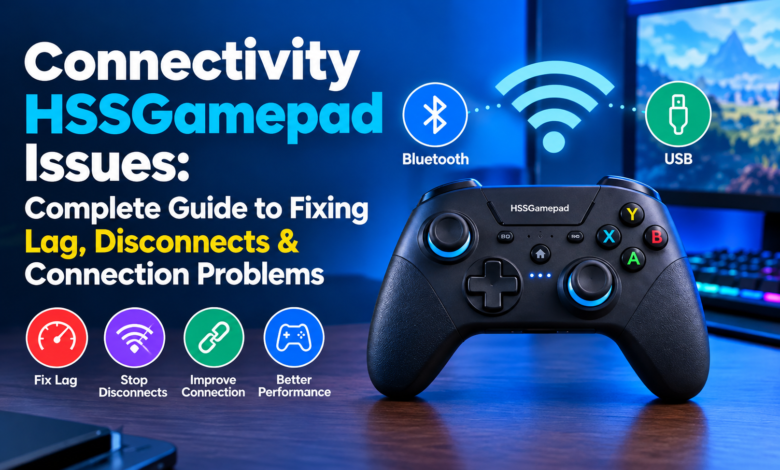
Connectivity Issues HSSGamepad: Easy Ways to Fix Connection Problems and Improve Gaming

Introduction
HSSGamepad can make gaming more comfortable and enjoyable by giving players physical controls instead of relying only on a keyboard or touchscreen. However, like other gaming controllers, it can sometimes experience connection problems. When the controller repeatedly disconnects, fails to pair, or is not detected by a device, troubleshooting can become frustrating.
The good news is that many controller connection problems are caused by simple issues. Bluetooth settings, USB cables, outdated drivers, low battery levels, interference, and incorrect device configurations can all affect connectivity. Identifying the actual cause is the first step toward finding a reliable solution.
Understanding connectivity issues hssgamepad users commonly experience can save time and prevent unnecessary changes to the controller or gaming device. A systematic troubleshooting process is usually more effective than trying random solutions.
Connection problems can also appear differently depending on the device being used. A controller might connect successfully to a computer but fail to work properly with a phone, tablet, smart TV, or another supported platform. This makes it important to check both the controller and the device.
This guide explains the most common causes of HSSGamepad connection problems and provides practical steps for troubleshooting them. Whether your controller is not pairing, keeps disconnecting, or connects without responding correctly, these suggestions can help you narrow down the problem.
Common Causes of HSSGamepad Connection Problems
Bluetooth Pairing Problems
Bluetooth pairing is one of the most common reasons a wireless controller may fail to connect. If HSSGamepad does not appear in the available Bluetooth device list, make sure Bluetooth is enabled on your gaming device. The controller should also be switched on and placed into its appropriate pairing mode.
Sometimes, a controller has already been paired with another device. In that situation, it may attempt to reconnect to the previous device instead of becoming available for a new connection. Turning Bluetooth off on nearby devices can help prevent this conflict.
Another useful step is removing the controller from the previously saved Bluetooth list. After forgetting the device, restart Bluetooth and search for the controller again. This creates a fresh pairing process and can resolve connection records that have become corrupted.
If pairing repeatedly fails, restart both the controller and the device. A simple restart can clear temporary Bluetooth errors and restore normal communication between the two devices.
These basic steps often resolve connectivity issues hssgamepad users encounter when attempting to establish a wireless connection. If the problem continues, checking battery level and device compatibility should be the next step.
USB and Cable-Related Issues
Wired connections can also cause problems. A damaged USB cable may provide inconsistent power or fail to transmit data correctly. The controller may appear to turn on while the gaming device does not recognize it properly.
Try using another compatible USB cable if possible. Some cables are designed primarily for charging and may not support reliable data transfer. Using a suitable data cable can make a significant difference when connecting a controller to a computer.
The USB port itself can also be responsible. Dust, loose connections, or a malfunctioning port may prevent the controller from communicating correctly. Testing another USB port can help determine whether the issue is related to the computer or the controller.
Avoid repeatedly moving a loose cable while gaming. Even a small interruption can cause the controller to disconnect and reconnect. A stable connection is especially important during competitive or long gaming sessions.
If the controller works wirelessly but not through USB, the issue may be related to the cable, port, or USB configuration. Testing the controller on another compatible device can help identify which component is responsible.
How to Fix HSSGamepad Connectivity Issues
Restart and Reconnect Everything
The simplest troubleshooting method is often the most useful. Turn off the HSSGamepad, disable Bluetooth or unplug the USB connection, and restart the gaming device. After the device boots completely, reconnect the controller.
Restarting gives the operating system an opportunity to reload its Bluetooth, USB, and input-device services. Temporary software conflicts can sometimes prevent a controller from communicating correctly even when the hardware is functioning normally.
For wireless connections, keep the controller reasonably close to the device during the pairing process. Distance and physical obstacles can weaken wireless communication, especially when the initial connection is being established.
It is also helpful to disconnect unnecessary Bluetooth accessories temporarily. Multiple active wireless devices can sometimes make troubleshooting more difficult because it becomes harder to determine which connection is causing the problem.
After reconnecting, test the controller in a simple game or controller-testing screen. This helps determine whether the connection is stable rather than relying only on the controller appearing in the device list.
Check Battery and Power
A low battery can create confusing connection symptoms. Some wireless controllers may turn on but fail to maintain a stable connection when their battery level becomes too low.
Charge the controller adequately before performing further troubleshooting. If possible, use a reliable charging source and allow the device enough time to charge before testing it again.
If the controller disconnects shortly after being connected, battery condition should be considered. A battery that no longer holds a charge properly can cause repeated interruptions during use.
Power-saving settings on the connected device may also affect wireless accessories. If the controller disconnects after periods of inactivity, check whether the operating system is putting Bluetooth or USB services into a power-saving state.
Keeping the controller charged and maintaining a stable power connection can eliminate one of the easiest causes of connectivity issues hssgamepad users may encounter.
Software and Compatibility Checks
Update Drivers and System Software
On computers, controller connectivity can depend on operating-system drivers. If the required driver is outdated or malfunctioning, the system may fail to recognize the controller correctly.
Check for available operating-system updates and install legitimate driver updates when appropriate. Avoid downloading unknown driver packages from unreliable websites because they may contain unwanted or unsafe software.
After installing updates, restart the computer and reconnect the controller. This allows the system to reload the updated components and can resolve recognition problems.
Gaming platforms may also receive updates that change how input devices are handled. Keeping the operating system and relevant gaming software updated can therefore improve compatibility.
If the controller worked previously but stopped after a major software change, checking recent system updates can provide an important clue. The problem may be software-related rather than a hardware failure.
Check Device Compatibility
Not every controller works identically with every operating system or gaming platform. A controller may support one connection method on a computer while requiring a different configuration on another device.
Before troubleshooting extensively, confirm that your HSSGamepad model supports the device you are trying to use. Compatibility can vary between operating systems, connection modes, and individual controller models.
Some games also have their own controller settings. A controller can be connected successfully at the system level but remain inactive inside a particular game because controller input has not been enabled.
Check the game’s input or controller settings and make sure the correct device is selected. If another controller is connected, temporarily disconnecting it can also help identify input conflicts.
Understanding compatibility is particularly important when dealing with connectivity issues hssgamepad, because a connection failure does not always mean the controller itself is defective.
Preventing Future HSSGamepad Connection Problems
Keep Connections Stable
Prevention is easier when the controller and gaming device are kept in good condition. For wireless gaming, avoid placing the controller too far away from the connected device.
Physical obstacles and nearby wireless equipment can sometimes affect signal quality. Keeping the gaming area organized and minimizing unnecessary wireless connections can help create a more stable environment.
For wired gaming, use a good-quality compatible cable and avoid bending it sharply. Repeated stress around the connector can eventually damage the cable and lead to intermittent disconnections.
Keep the controller’s charging port and USB ports clean and handle connectors carefully. Do not force a connector into a port if it does not fit naturally.
Regularly checking the controller, cable, battery, and device settings can help identify small problems before they become persistent connectivity failures.
Avoid Unnecessary Configuration Changes
When troubleshooting, change one setting at a time. Making many changes simultaneously can make it difficult to determine which solution actually fixed the problem.
Start with simple actions such as restarting the controller, checking Bluetooth, verifying the battery, and testing another port or cable. Only move to more advanced settings if these basic steps do not help.
If a controller is working correctly, avoid changing system-level input settings without a specific reason. Incorrect configurations can sometimes create new problems.
It is also useful to remember the original settings before making changes. If a new configuration causes unexpected behavior, you can return to the previous setup.
A simple and organized troubleshooting approach makes it easier to resolve recurring connectivity issues hssgamepad without unnecessarily changing settings that were already working.
When HSSGamepad Still Will Not Connect
Test Another Compatible Device
Testing the controller with another compatible device is one of the best ways to isolate the source of a connection problem. If it works normally elsewhere, the original gaming device may be responsible.
For example, a controller that connects successfully to another computer may indicate that the first computer has a Bluetooth, USB, driver, or configuration issue.
On the other hand, if the controller fails to connect across multiple compatible devices, the controller itself may require further inspection.
Testing should be performed using the connection method supported by the controller. If wireless pairing is being tested, make sure Bluetooth is configured correctly on the second device.
This simple comparison can prevent unnecessary troubleshooting because it helps separate controller-related problems from platform-related problems.
Consider Hardware Problems
If software troubleshooting does not solve the problem, hardware may be involved. A damaged USB port, faulty wireless component, worn connector, or battery problem can all affect connectivity.
Look for obvious physical damage, but do not attempt complicated repairs unless you have the appropriate technical knowledge and equipment. Opening electronic hardware can cause additional damage.
If the controller is still under warranty, contacting the manufacturer or retailer may be a better option. Keep purchase information and model details available if support requests them.
For older controllers, replacement may sometimes be more practical than repair, especially when multiple components have started showing problems.
Before deciding that the controller has failed, however, repeat the basic troubleshooting steps carefully. Many connectivity issues hssgamepad users experience are caused by configuration, pairing, power, or cable problems rather than permanent hardware failure.
Frequently Asked Questions
Why is my HSSGamepad not connecting through Bluetooth?
Make sure Bluetooth is enabled and the controller is in pairing mode. Forget any previous controller entry from the device’s Bluetooth settings, restart both devices, and attempt pairing again. Keeping nearby Bluetooth devices disconnected temporarily can also help.
Why does my HSSGamepad keep disconnecting?
Repeated disconnections may be caused by a low battery, wireless interference, excessive distance, power-saving settings, or software problems. Charge the controller, move closer to the connected device, restart Bluetooth, and test the controller again.
Can a USB cable cause controller connection problems?
Yes. A damaged or charge-only USB cable may prevent proper data communication. Try another compatible data cable and a different USB port to determine whether the cable or port is causing the problem.
Why does my computer detect the controller but my game does not?
The game may not have controller input enabled, or another input device may be taking priority. Check the game’s controller settings and make sure the correct device is selected. Restarting the game after connecting the controller can also help.
Does updating software help with controller connectivity?
It can. Operating-system, driver, and gaming-platform updates may resolve compatibility or device-recognition problems. Use official update methods whenever possible and restart the device after installing updates.
When should I consider replacing my HSSGamepad?
Replacement may be worth considering if the controller consistently fails on multiple compatible devices after basic troubleshooting. Physical damage, severe battery problems, or persistent connection failures can indicate a hardware issue that requires professional inspection or replacement.
Conclusion
HSSGamepad connectivity problems can be frustrating, but many connection failures have straightforward solutions. Bluetooth pairing errors, weak batteries, damaged cables, incorrect settings, outdated software, and compatibility limitations are among the most common causes.
The best approach is to troubleshoot systematically. Start by restarting the controller and gaming device, checking the battery, reconnecting Bluetooth, testing another USB cable or port, and verifying that the controller is compatible with the platform.
If those steps do not work, testing the controller with another compatible device can help determine whether the problem comes from the controller or the original gaming system. This prevents unnecessary changes and makes further troubleshooting more focused.
Keeping software updated, using reliable cables, maintaining adequate battery power, and avoiding unnecessary configuration changes can also reduce the likelihood of future connection problems.
Ultimately, understanding the common causes behind connectivity issues hssgamepad makes troubleshooting much easier. With a careful approach and a few simple checks, many connection problems can be resolved without replacing the controller or making complicated system changes.