

Introduction
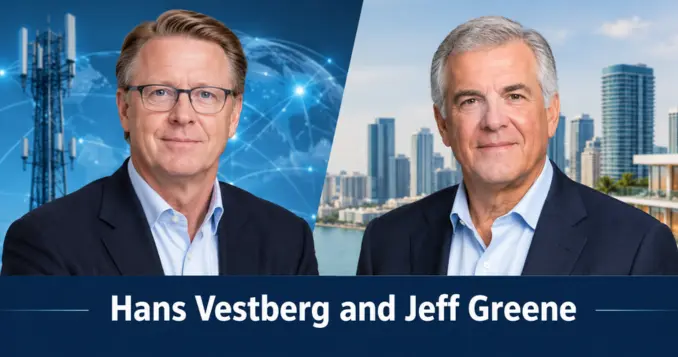
Hans Vestberg and Jeff Greene are two prominent figures whose careers highlight different forms of success in the modern business world. Vestberg is widely recognized for his leadership in telecommunications and technology, while Greene is known for his work in real estate investment and business development. Although they operate in different industries, both demonstrate how strategic decisions, long-term thinking, and the ability to recognize opportunities can shape successful careers.
The topic of Hans Vestberg and Jeff Greene brings together two individuals who have built their reputations through different professional experiences. One has helped lead a major telecommunications company through technological change, while the other has developed a career in real estate and investment. Their professional journeys offer useful lessons about leadership, financial decision-making, innovation, and business growth.
Understanding their backgrounds helps explain how people can achieve influence without following the same career path. Their stories also show why adaptability and careful planning matter in industries that face changing economic conditions and growing competition.
Who Is Hans Vestberg?
Early Life and Professional Background
Hans Vestberg is a Swedish business executive best known for his leadership at Verizon Communications, one of the major telecommunications companies in the United States. Before joining Verizon, he spent many years working at Ericsson, a Swedish company that develops telecommunications equipment and network technology. His experience in the technology sector helped him develop a strong understanding of global communications and the infrastructure needed to support digital services.
Vestberg studied business administration and economics at Uppsala University in Sweden. His education provided a foundation for understanding organizations, financial decisions, and international business operations. These skills later became important as he moved into senior management positions at major technology companies.
His career developed during a period when mobile communications were becoming increasingly important to businesses and consumers. Telecommunications companies needed leaders who understood both technical developments and the commercial challenges of expanding their services. Vestberg’s experience placed him in a position to work across these areas.
Career at Ericsson
Vestberg joined Ericsson in 1991 and gradually moved into positions with greater responsibility. During his time with the company, he gained experience in financial management, regional operations, and international business strategy. Working across different markets helped him understand the challenges of serving customers in countries with different economic conditions and technology needs.
In 2010, he became Ericsson’s president and chief executive officer. The position placed him at the center of a rapidly changing telecommunications industry, where network operators were investing in mobile broadband and preparing for the next generation of wireless technology. His role involved managing business priorities while helping the company respond to competition and changes in customer demand.
His Ericsson experience became an important part of his professional identity. It gave him exposure to the global technology market and helped prepare him for the responsibilities he would later take on in the United States.
Hans Vestberg’s Leadership at Verizon
Becoming Chief Executive Officer
Hans Vestberg joined Verizon in 2017 and became chief executive officer in August 2018. His appointment reflected the company’s need to strengthen its position in wireless communications and prepare for new opportunities in network technology. Verizon operates in a competitive environment where customers expect reliable connectivity, better coverage, and increasingly advanced digital services.
As CEO, Vestberg has been responsible for setting strategic priorities, overseeing business operations, and guiding investment decisions. His leadership has involved balancing the need to maintain reliable existing services with the need to invest in new technologies. These responsibilities require careful planning because telecommunications networks are expensive to build and maintain.
Running a large company also means coordinating teams, responding to investors, and addressing changing customer expectations. Vestberg’s international background and experience in telecommunications have been relevant to these responsibilities.
Focus on 5G and Network Development
One of the major themes of Vestberg’s Verizon leadership has been the development and expansion of 5G wireless networks. This technology is designed to support faster data connections, improved network capacity, and new applications for businesses and consumers. Its potential uses include connected devices, industrial systems, and services that depend on reliable wireless communication.
Building 5G infrastructure requires substantial investment in network equipment, spectrum, and supporting technology. Companies must decide where to deploy resources, how to compete with rivals, and how to make those investments commercially valuable. Vestberg’s leadership has operated within these broader industry challenges.
The long-term importance of 5G extends beyond faster smartphone connections. Businesses may use advanced networks to support connected equipment, remote monitoring, and other digital processes. However, the benefits depend on coverage, affordability, customer demand, and the development of useful applications.
Who Is Jeff Greene?
Background and Business Career
Jeff Greene is an American real estate investor and entrepreneur known for building wealth through property investments. He became particularly prominent through his activities in real estate, including investments connected to the US housing market. His career represents a different approach to business success from Vestberg’s corporate technology leadership.
Real estate investing requires an understanding of property values, financing, rental demand, and economic conditions. Investors must assess whether a property is fairly priced, how much it may cost to maintain, and whether its potential returns justify the risks. Greene’s career has attracted attention because of his involvement in major property investments and his public profile as a wealthy businessman.
His professional journey illustrates how investors can use market research and financial planning to identify opportunities. It also highlights the importance of timing, because property markets can change significantly as interest rates, employment conditions, and housing demand shift.
Real Estate Investment and Market Opportunities
Greene’s investment activities have been associated with residential and other real estate opportunities. Property investors often evaluate potential returns by considering rental income, future resale value, financing costs, and the broader economic environment. These factors can determine whether an investment becomes profitable over time.
Real estate can offer several possible advantages, including income from rentals and the potential for property values to appreciate. However, it also carries risks. Properties can lose value, vacancies can reduce income, and borrowing costs can make investments more expensive. Successful investors must consider these possibilities rather than focusing only on potential gains.
Greene’s public reputation reflects his experience in a market where recognizing changing conditions can create opportunities. His career also demonstrates why investment decisions need to account for both potential rewards and the possibility of financial losses.
Comparing Hans Vestberg and Jeff Greene
Different Industries, Different Strategies
The most obvious difference between these two figures is the industries in which they built their careers. Vestberg works in telecommunications, a field driven by technological innovation, network reliability, customer relationships, and large infrastructure investments. Greene’s career has centered on real estate and investment, where property prices, financing, location, and market cycles play important roles.
These industries require different forms of expertise. A telecommunications executive must understand network development, service quality, competition, and the changing needs of businesses and consumers. A property investor must evaluate assets, assess financial exposure, and make decisions based on local and national economic conditions.
Despite these differences, both fields reward informed decision-making. Leaders and investors need to understand their markets, evaluate risks, and decide how to allocate resources. Neither technological expertise nor investment experience eliminates uncertainty, but both can help people make better-informed choices.
Leadership Versus Investment
Vestberg’s position involves leading a large organization with employees, customers, shareholders, and extensive infrastructure. His decisions affect how Verizon competes, invests in networks, and delivers services. Corporate leadership therefore requires coordination, communication, accountability, and a clear long-term strategy.
Greene’s investment career places greater emphasis on identifying assets and making financial decisions. Investors generally have to judge when to buy, hold, improve, or sell properties. They must also consider borrowing costs and changes in market demand that could affect the value of their holdings.
The comparison is useful because it shows that professional success can take many forms. Some people build their influence by managing organizations and developing technology, while others do so by investing capital and identifying opportunities in financial markets.
What Their Careers Teach About Business Success
The Importance of Long-Term Planning
Long-term planning is important in both telecommunications and real estate. Companies such as Verizon must invest today in infrastructure that may take years to deliver its full commercial value. These decisions involve forecasting demand, managing costs, and determining which technologies are likely to remain useful as the market develops.
Real estate investors also need to think beyond immediate returns. A property may require years of ownership before its investment potential becomes clear. Financing terms, maintenance costs, neighborhood development, and changes in demand can all influence its long-term performance.
The broader lesson is that business decisions should not depend entirely on short-term results. A clear strategy, realistic expectations, and regular assessment of changing conditions can help businesses and investors respond more effectively to uncertainty.
Adaptability and Risk Management
Adaptability is another important lesson. Telecommunications companies must respond to new technologies, changing customer habits, and competition from other service providers. Leaders need to reassess priorities when market conditions change rather than assuming that yesterday’s strategy will always work.
Real estate investors face their own uncertainties, including changes in interest rates, property demand, and access to financing. A decision that appears attractive during a strong market may become less appealing when borrowing costs rise or prices decline. Risk management helps investors prepare for these changes.
Neither career suggests that success comes from avoiding every risk. Instead, the important task is to understand the risks involved, consider alternative outcomes, and make decisions that fit the available resources and long-term objectives.
Public Influence and Professional Reputation
Corporate Responsibility and Public Expectations
Leading a major telecommunications company brings responsibilities beyond financial performance. Customers depend on communications networks for work, education, business operations, and everyday contact. Decisions about network quality, service pricing, security, and infrastructure investment can therefore affect many people.
Executives are also expected to communicate clearly with investors and employees. Their decisions are examined by analysts, regulators, customers, and the wider public. Maintaining trust requires balancing commercial objectives with service quality and responsible management.
Vestberg’s public role at Verizon illustrates the visibility that comes with leading a major corporation. His performance is connected to the company’s strategic decisions and its ability to respond to a rapidly changing communications market.
Wealth, Investment, and Public Attention
Real estate investors can also attract considerable public attention, particularly when their investments involve large properties or major market movements. Their decisions may become part of wider discussions about housing affordability, economic opportunity, and the distribution of wealth.
Greene’s profile as an investor reflects the public interest in how wealth is created and how financial decisions influence business outcomes. However, a person’s wealth alone does not explain the full story of a career. Experience, timing, financing, judgment, and market conditions can all contribute to investment results.
Examining professional reputations in context provides a more balanced understanding of success. It encourages readers to look beyond headlines and consider the decisions, responsibilities, and economic circumstances behind an individual’s public image.
FAQs About Hans Vestberg and Jeff Greene
1. Who is Hans Vestberg?
Hans Vestberg is a Swedish business executive who became CEO of Verizon Communications in August 2018. He previously served as president and CEO of Ericsson and has extensive experience in telecommunications and technology.
2. Who is Jeff Greene?
Jeff Greene is an American real estate investor and entrepreneur known for his property investments and business activities. His career is associated with real estate markets and investment opportunities.
3. Do Hans Vestberg and Jeff Greene work in the same industry?
No. Vestberg is a telecommunications executive, while Greene is known for real estate investment. Their careers involve different markets, professional responsibilities, and business strategies.
4. What is Hans Vestberg known for at Verizon?
Vestberg is known for leading Verizon and overseeing its strategic priorities, including wireless network development and investment in 5G technology.
5. What can business professionals learn from Jeff Greene?
His career provides an opportunity to examine property investment, market timing, financial planning, and risk assessment. Investors should also remember that real estate returns are never guaranteed.
6. Why are Hans Vestberg and Jeff Greene interesting to compare?
Their careers demonstrate two different paths to professional influence. One focuses on corporate leadership and telecommunications infrastructure, while the other centers on property investment and financial decision-making.
Conclusion
Hans Vestberg and Jeff Greene represent two distinct approaches to business success. Vestberg has built his career through telecommunications leadership, international experience, and strategic decisions at major technology companies. Greene has established his public profile through real estate investment and an understanding of property markets.
Although their industries differ, both careers highlight the importance of planning, adaptability, market knowledge, and risk management. Their experiences also show that professional influence can develop through several routes, from leading a large organization to evaluating investment opportunities.
For readers interested in business and entrepreneurship, the comparison offers a valuable reminder that there is no single formula for success. Building a sustainable career requires understanding the chosen industry, making informed decisions, and adjusting strategies as circumstances change.